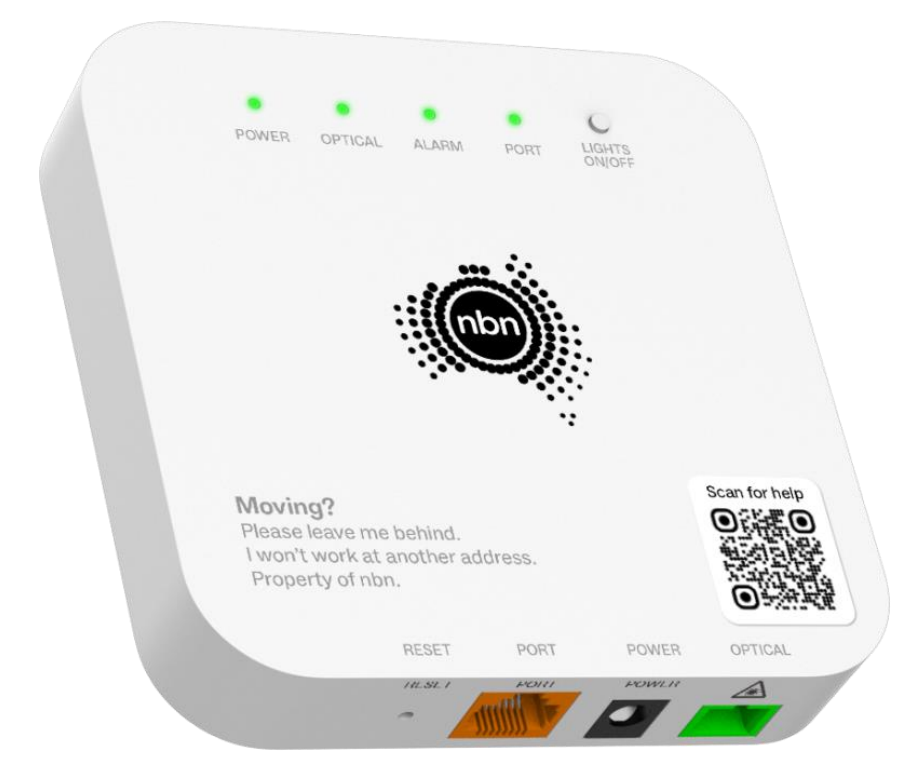
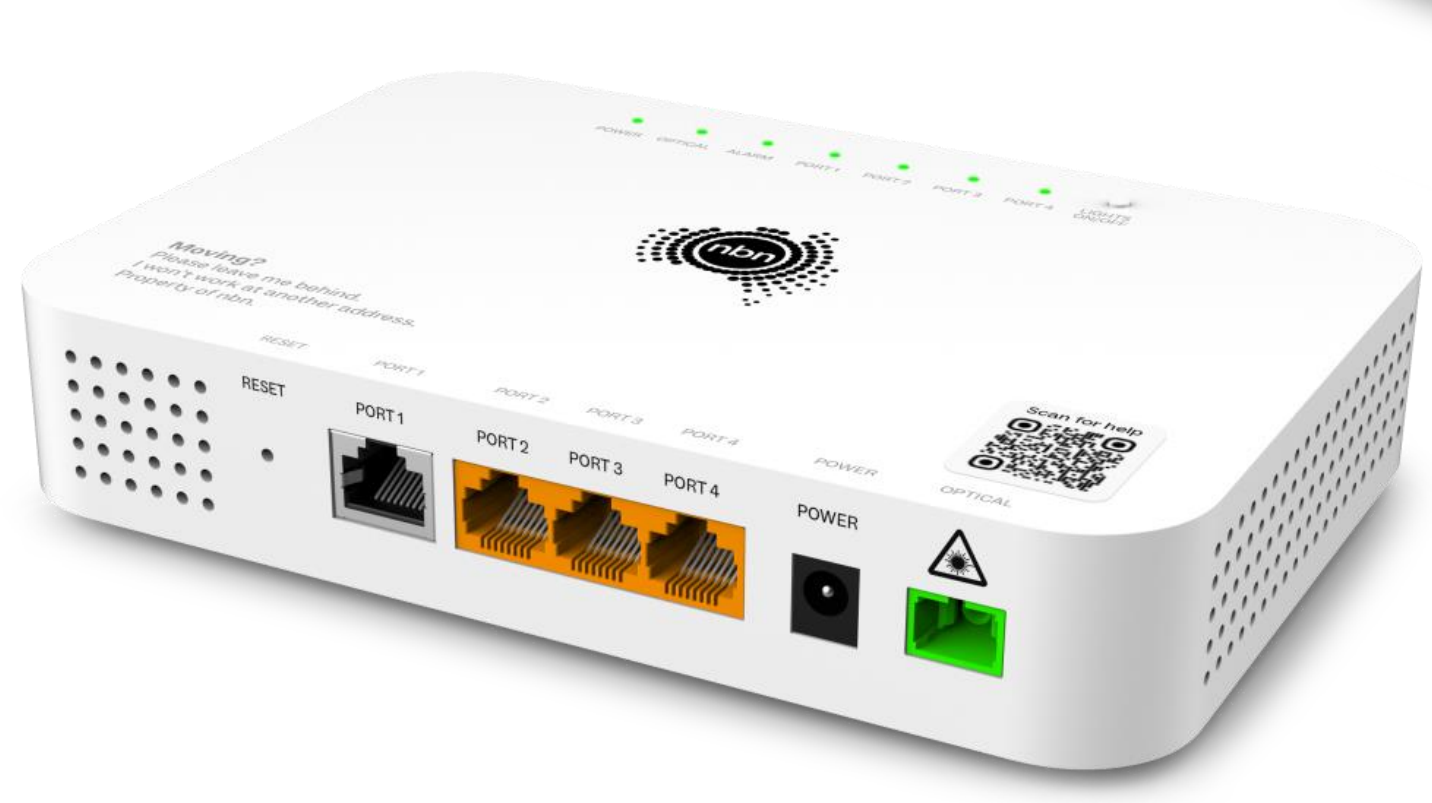
nbn Fibre to the Premises (FTTP) – BYO modem/router setup guide

Step 1: Locate the nbn FTTP connection box

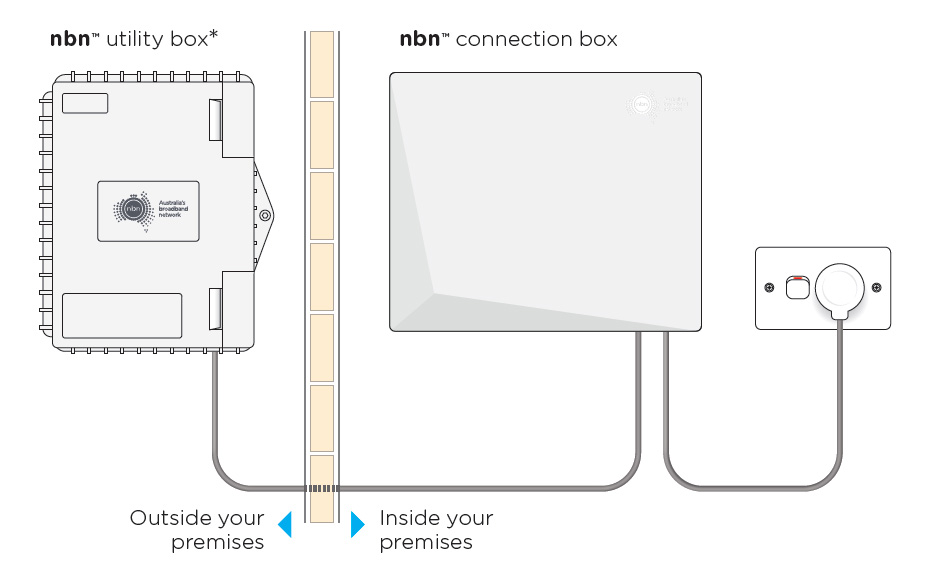
Find the indoor nbn FTTP connection box in your home. This will usually be installed in a garage but may be located in an odd location such as a wardrobe, cupboard or underneath a staircase. Ensure you check your entire home for the FTTP connection box including any unusual places that you may not expect.

Nbn Utility Box

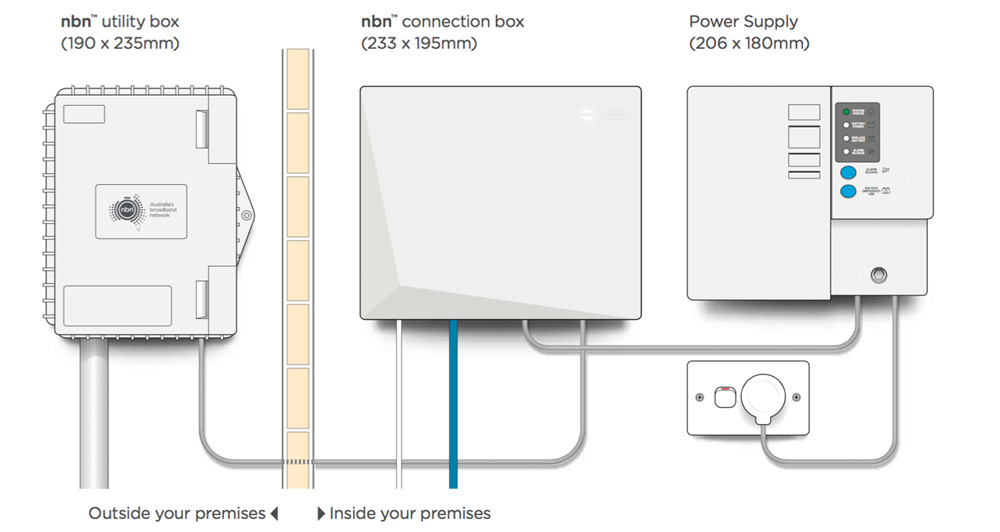
The FTTP connection box may be installed without a battery backup unit (as shown above) or with an optional battery backup unit. The image below shows the FTTP connection box installed alongside a battery backup unit.

💡 Just so you know: The battery backup adds little value to an nbn FTTP service. If your power is cut, your FTTP connection box will continue to run for a limited time on the battery backup, but your modem/router will not be powered, and any associated services such as an nbn home phone (VoIP) service will also stop working.

Nbn Connections Home Installation

Step 2: Plug in your modem/router

You will need to plug your modem/router into your FTTP connection box.

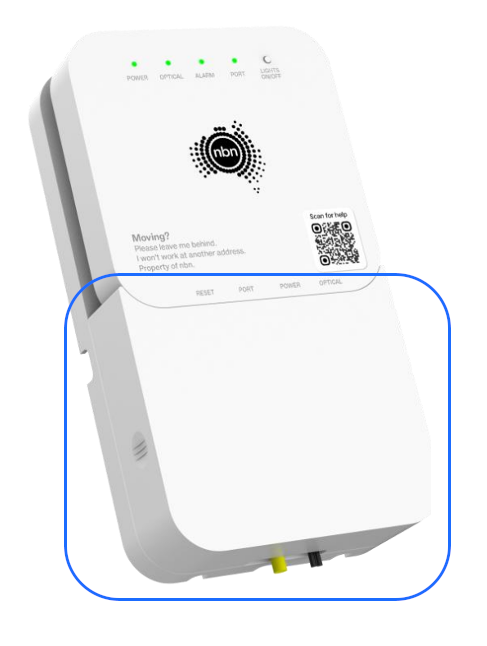
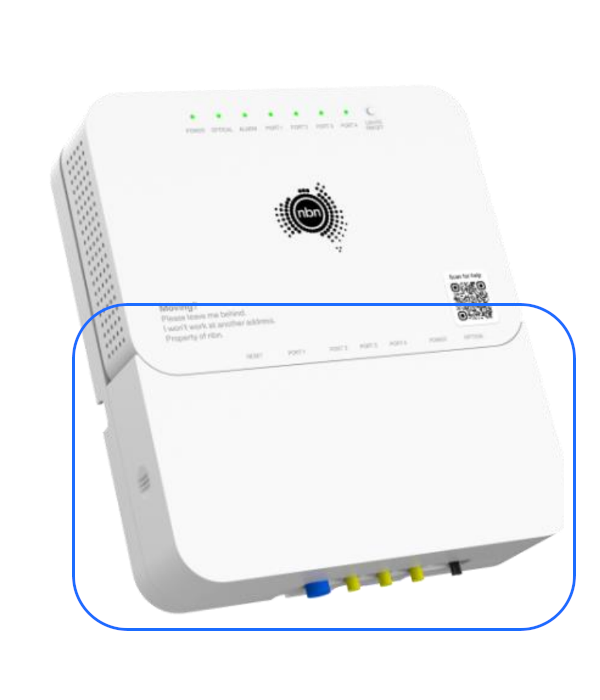
First, remove the cover on the FTTP connection box to access the ports on the bottom. There are three versions of the FTTP connection box that may be installed, and your setup may include one of the models shown below:
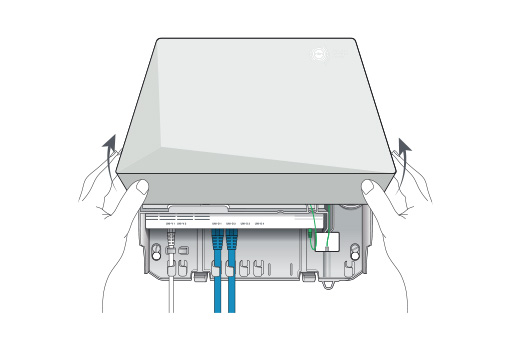
Previous FTTP connection boxPrevious nbn connection box

FTTP 1 Port CoverFTTP connection box – one port

FTTP 4 Port CoverFTTP connection box – four port

Ensure that the included power cable from the power port on the FTTP connection box is plugged in and secure. Plug the other end of the power cable into a power wall outlet in your home and switch the powerpoint on.

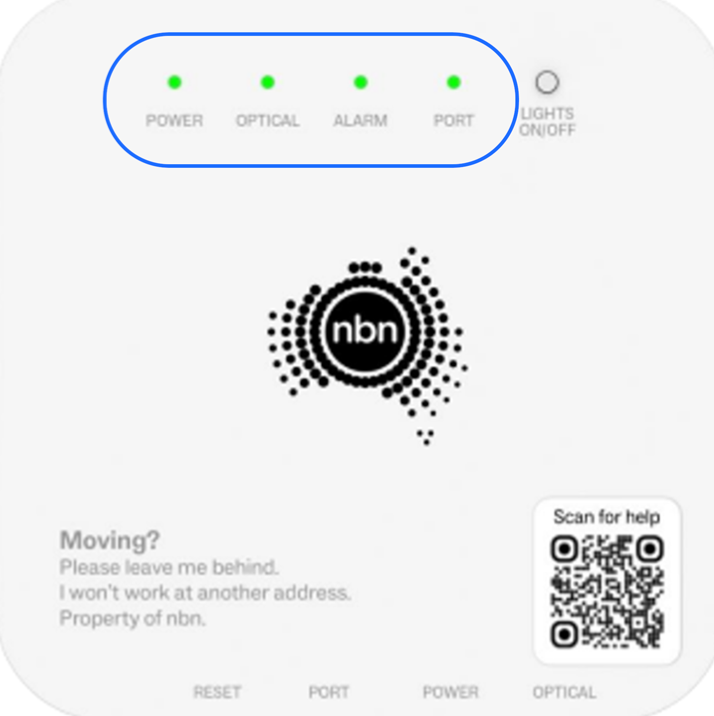
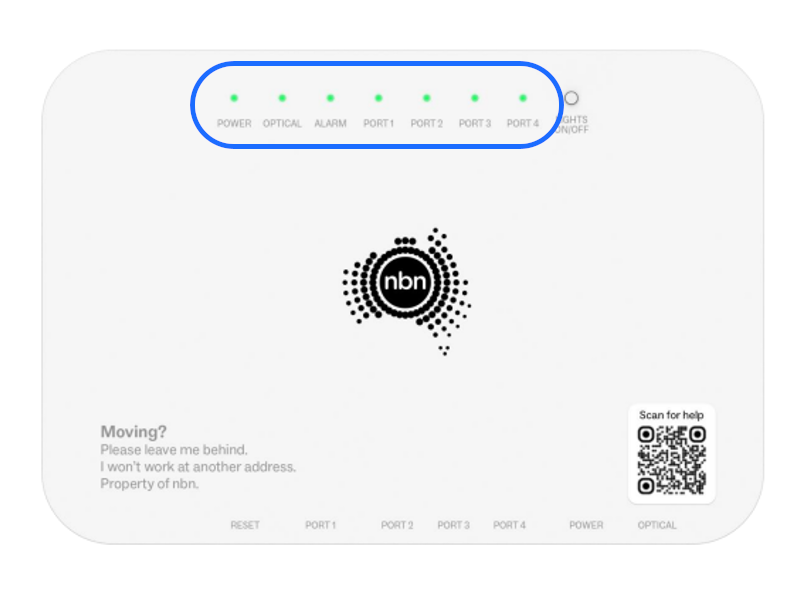
After a few minutes, you should notice the POWER and OPTICAL lights on the front of the NTD turn solid green. If you have a battery backup unit installed, the ALARM button may also be green.
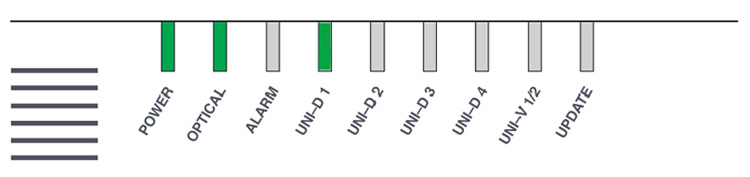
Previous FTTP lightsPrevious nbn connection box

FTTP 1 Port LightsFTTP connection box – one port

FTTP 4 Port LightsFTTP connection box – four port

💡 Just so you know: If the optical light on your FTTP connection box remains red or off, please contact our support team for further troubleshooting.

Now, take your modem/router’s power supply cable and connect it to an electrical outlet. Switch the power outlet on.

Take an Ethernet cable (typically blue, yellow, grey or white) and plug one end into the required port marked UNI-D or PORT on the back of the nbn FTTP connection box.

If you have an FTTP connection box with four ports, the active UNI-D/PORT would have been sent to you via email and SMS – in many cases, this is usually UNI-D/PORT 1 but may be another number such as UNI-D/PORT 2, UNI-D/PORT 3 or UNI-D/PORT 4.
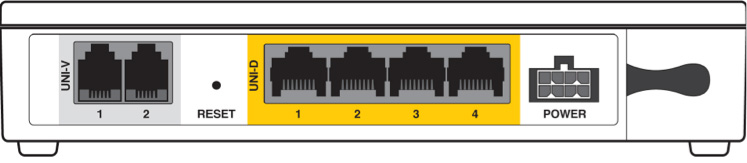
Previous FTTP PortsPrevious nbn connection box

FTTP 1 Port FrontFTTP connection box – one port

FTTP 4 Port FrontFTTP connection box – four port

Plug the other end of this Ethernet cable into the WAN port on your modem/router. The WAN port may be labelled INTERNET, WAN/LAN or FIBRE depending on the make and model of your modem/router.
Step 3: Configure your modem/router

  1. Make sure your Ethernet cable is connected from the active UNI-D/PORT port on the nbn connection box to the WAN port on your modem/router.
  2. Connect a computer, laptop, smartphone, or tablet to your modem/router using Wi-Fi or an Ethernet cable.
  3. Open a web browser and enter your modem/router’s default IP address (often 192.168.1.1, 192.168.20.1, 10.1.1.1 or 10.0.0.138). You can usually find this printed on the back or bottom of the device.
  4. Log in using the default username (usually admin) and password (usually admin or password). If these don’t work, check your modem’s manual, manufacturer’s website, or perform a factory reset.
  5. Locate the Internet Setup or WAN Setup section. If your modem has a Setup Wizard, follow it. When prompted for connection settings, enter:
    • Connection Type / Encapsulation: PPPoE (preferred) or IPoE/DHCP
    • Service Type / Access Type: Ethernet WAN
  6. If using PPPoE, enter the username and password from your MATE welcome email.
  7. Enable IPv6 if available, set to DHCPv6 or Auto Config (SLAAC).
  8. Save your settings and wait for your modem to connect. Lights should be green, blue or another ‘positive’ colour. Some lights may flash to indicate activity.
  9. Test your connection by visiting a website. If it works, you’re online.
💡 Tip: If you get stuck during setup or your modem won’t connect, contact our support team.